
Why Most Influencer Campaigns Fail—and How CPG Brands Can Fix Them
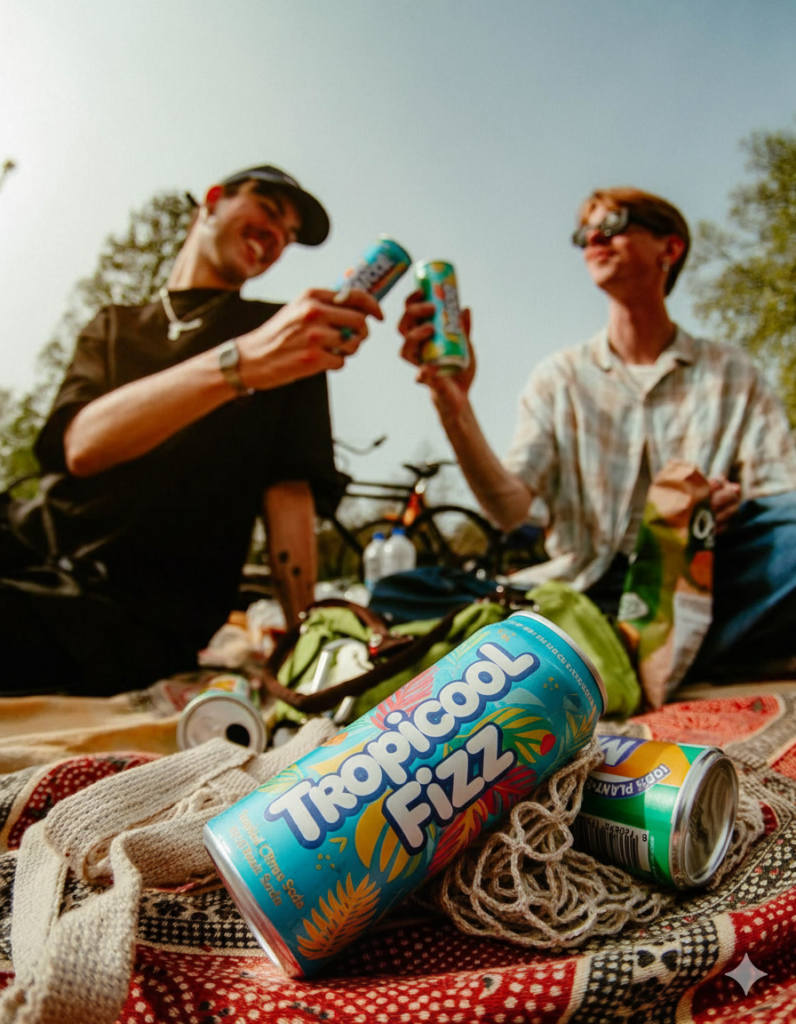
Influencer marketing did not stop working. Most brands simply kept running it the wrong way for too long. What once delivered outsized returns has become a line item that looks good in decks and underperforms in reality. The reasons are not mysterious. Influencer campaigns fail for the same structural mistakes over and over again, especially in food and beverage.
The first failure is fake engagement. Brands still chase follower counts, surface-level reach, and inflated metrics that have little correlation with purchase behavior. Likes and views are easy to buy, easy to manipulate, and easy to misinterpret. A post can look successful while driving zero incremental sales. In CPG, where margins are tight and repeat purchase is everything, this disconnect is fatal. Attention without trust does not convert.
The second failure is creator misalignment. Many campaigns prioritize “influencer fit” based on aesthetics or popularity rather than actual consumer overlap. A creator may look on-brand but have an audience that does not buy food products, does not cook, or does not shop in the channels the brand depends on. The result is content that feels forced and irrelevant. Audiences sense this immediately. When the creator does not genuinely use or understand the product, credibility collapses.
Another major issue is the obsession with one-off posts. Brands treat influencer campaigns like isolated events: a launch, a drop, a burst of content, then silence. This approach misunderstands how influence actually works. Trust is not built in a single exposure. It is built through repetition, consistency, and reinforcement across time and platforms. One post disappears in 24 hours. A system compounds.
Lack of attribution is another silent killer. Many brands run influencer campaigns without any clear framework for measuring impact beyond vanity metrics. There is no tracking of downstream behavior, no connection to Amazon performance, no linkage to review velocity, no analysis of content reuse or long-term lift. When results are unclear, budgets are cut or reallocated arbitrarily, reinforcing the false belief that influencer marketing is unreliable.
All of these failures stem from the same root problem: campaigns are treated as creative experiments instead of operational systems. Successful CPG growth does not come from sporadic bets. It comes from repeatable processes that can be measured, optimized, and scaled.
Fixing this requires a fundamental shift in how influencer marketing is designed. The focus must move from promotion to participation. Creators should behave like real consumers, not brand mouthpieces. Buy & Try models solve this by aligning creator behavior with actual buyer behavior. When creators purchase the product, use it naturally, and share honest experiences, the content becomes credible by default.
Systemization is the second fix. Instead of one-off activations, brands need ongoing creator programs that run continuously. Multiple creators, consistent cadence, diverse audiences, and repeated exposure. This creates a baseline level of social proof that compounds over time rather than spiking and disappearing.
Attribution must also evolve. The goal is not to track every like, but to monitor the signals that matter: conversion rate changes, review growth, content reuse performance, retail validation, and external traffic quality. When influencer marketing is tied to these metrics, it becomes accountable and defensible.
Izzy’s approach is built around these principles. It replaces randomness with structure, vanity metrics with real signals, and short-term thinking with compounding systems. The brands that fix influencer marketing are not the ones spending more. They are the ones designing campaigns that behave like real consumer ecosystems. Those that do not will keep repeating the same mistakes, wondering why nothing sticks.